Guide
Té or cocimiento: making tea from whole Mexican herbs
Some of our bags print a short steep under a lid, others a simmer of a quarter of an hour and a rest off the heat. The part of the plant does not decide which, and each bag that prints a preparation tells you the one it needs.
YERBERO guides · published October 21, 2026
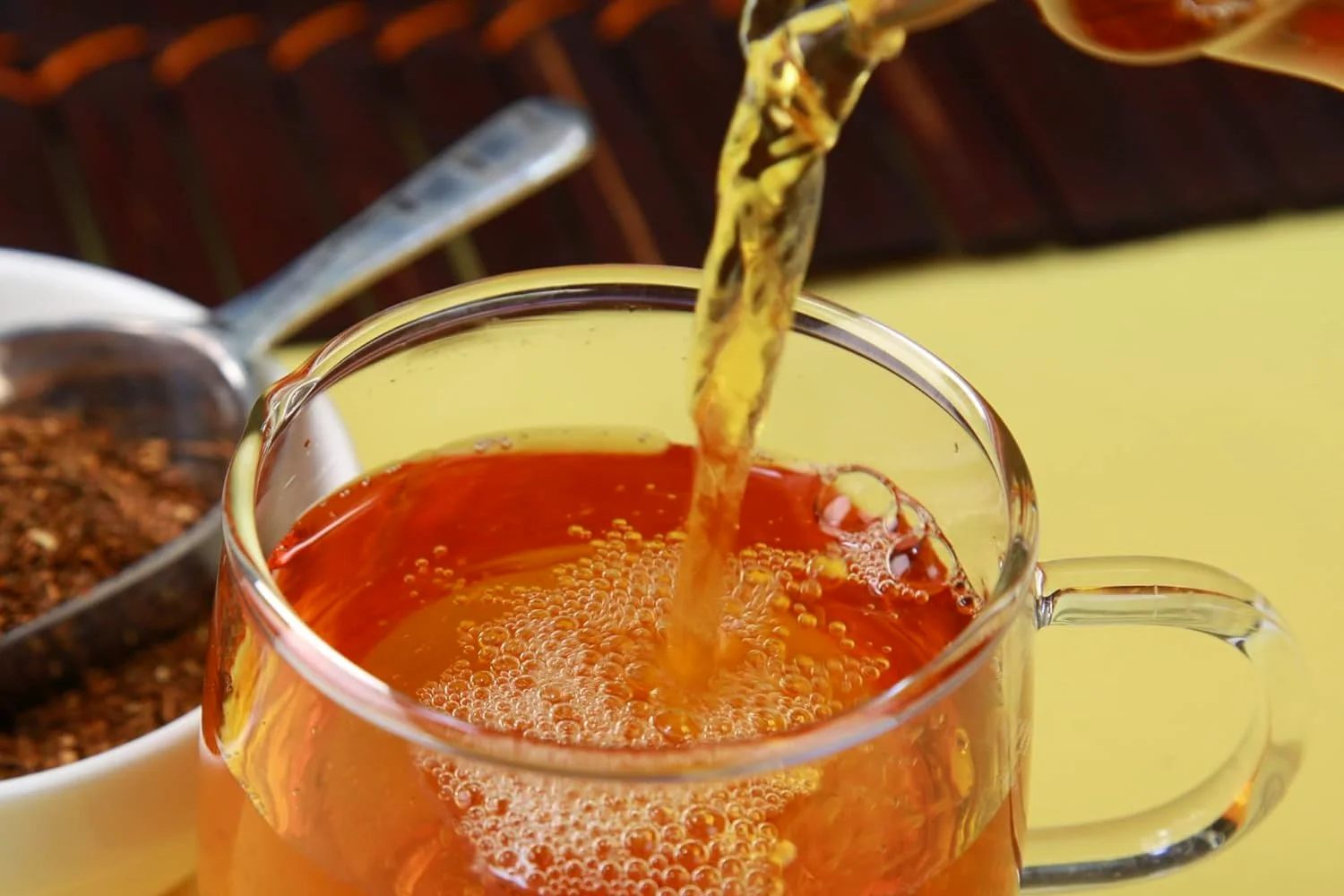
Two ways to put a plant in water
In Spanish, té covers almost anything you drink hot from a cup. Herbs that cook in the pot have their own word, cocimiento, from cocer, to cook. The difference has nothing to do with the name of the herb and everything to do with what happens on the stove.
For a té, an infusion, hot water goes over leaves, flowers or chips and they sit in it for a few minutes, often under a lid. For a cocimiento, a decoction, the plant goes into boiling water and simmers with it, sometimes for a full quarter of an hour. After that, several bags ask for a rest off the heat before you strain.
You might expect the toughness of the plant to settle which one it gets, and many home cooks do boil every bark. Our bags do not sort that way. Palo azul chips and the palo de víbora pair print the same three to five minutes under a lid as guava leaf, while calendula petals and rosemary leaves simmer. Go by the bag in your hand, not by the part of the plant.
You do not have to work this out herb by herb. Where a bag prints a preparation, it names the amount of plant, the water and the time. Where the bag shows none we can read, the product description gives one, and where the description differs from the bag, both are listed.
How each herb is made, and where the method comes from
| Herb | Part | Method | Printed on | How to make it |
|---|
| Guayaba, cardo mariano, pata de vaca, palo azul, palo de víbora y quina roja, guanábana in 0.75 oz and 1 lb | Leaf and bark | Té | The bag | 1 tablespoon in a strainer in a mug or teapot. Hot water over it, covered 3 to 5 minutes, strainer out. |
|---|
| Hoja de guanábana, 1.05 oz bag | Whole leaf | Cocimiento | The bag | 4 to 5 leaves in a cup of water. Bring to a boil, simmer 15 to 20 minutes, steep 5 to 10 off the heat, strain. |
|---|
| Caléndula | Whole flower | Cocimiento | The bag | 1 tablespoon of petals in a cup of boiling water. Simmer 15 to 20 minutes, steep 5 to 10 off the heat, strain. |
|---|
| Romero | Whole leaf | Cocimiento | The bag | 1 tablespoon of leaves in a cup of boiling water. Simmer 5 to 10 minutes, steep 5 to 10 off the heat, strain. |
|---|
| Hierba de San Juan | Cut leaf and petal | Cocimiento | The bag | 1 tablespoon of loose tea in a cup of boiling water. Simmer 5 to 10 minutes, then 5 to 10 off the heat, strain. |
|---|
| Canutillo | Cut stems | Té | The bag | 1 to 2 teaspoons. Water brought to a rolling boil and cooled a moment, poured over, steeped 5 to 7 minutes. |
|---|
| Palo azul en polvo | Ground bark | Té | The bag | 1 tablespoon to half a gallon. Boil the water, let it settle off the boil, steep 15 to 30 minutes. Alkaline water for the blue color. |
|---|
| Hoja de mango | Whole leaf | Cocimiento | Product description | 4 clean leaves in a pot of water over high heat. Off the heat at the boil, cool, strain. |
|---|
| Hoja de aguacate | Whole leaf | Té | Product description | Bring water to a boil, drop in two or three leaves, steep about 5 minutes. |
|---|
| Pasiflora | Whole herb | Té | Product description | Boil the water, turn off the heat, add the herb, let it sit 8 minutes, strain. |
|---|
| Salvia blanca en hoja | Whole and cut leaf | Té | Product description | 1 tablespoon to 10 oz of boiling water, a couple of minutes. |
|---|
| Pata de vaca | Crushed leaf | Cocimiento | Product description, beside the bag's steep | 1 tablespoon to 12 oz of water. Boil 15 minutes, rest 10 minutes covered, strain. |
|---|
| Palo azul | Bark and wood chips | Cocimiento | Product description, beside the bag's steep | Three to five pieces boiled in water. The water turns a blue tint as it stands, more so with alkaline water. |
|---|
| Romero | Whole leaf | Té | Product description, beside the bag's simmer | 1 teaspoon in an infuser, hot water over it, 3 to 5 minutes. |
|---|
Read down the method column and the part of the plant stops predicting the answer. A chip of bark and a guava leaf get the same three to five minutes under a lid, and a calendula petal simmers longer than either. Where the product description gives a longer boil than the bag, as with pata de vaca and palo azul, you can make the cup the bag gives or the longer pot.
Soursop and mango: two leaves, two methods
The 1.05 oz guanábana bag prints the longest leaf method we carry: four to five leaves in a cup of water, brought to a boil, simmered 15 to 20 minutes, then left off the heat 5 to 10 minutes more. The 0.75 oz and pound bags of the same leaf print the short tablespoon steep instead, so check which bag you are holding. Mango leaves show no method we can read on their bag, and the product description has you heat four leaves with the water and take the pot off at the boil.
The mango method gives no volume of water, only "a pot". Settle that once. Choose the pot you will always use, fill it to your usual line, pour that water into a measuring cup and write the number on a strip of tape under the lid. From then on, four leaves always meet the same amount of water, and one pot tastes like the last.
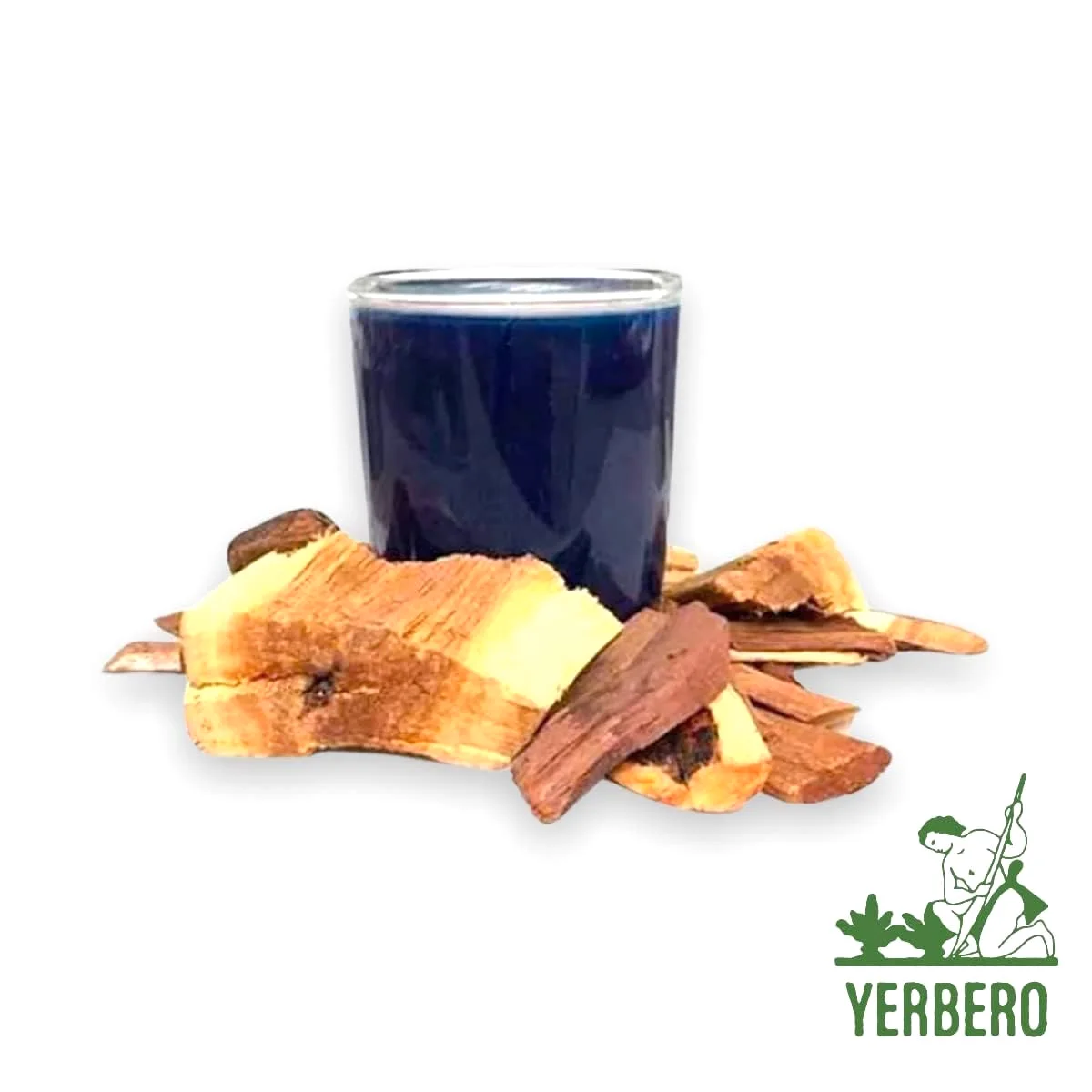 Palo azul chips and a glass of the tea after it has stood. Alkaline water deepens the blue.
Palo azul gives you a way to watch the color come. The chips bag prints the short steep, and the product description adds a longer boil of three to five pieces. Either way, pour a glass and leave it on the counter: the blue tint grows over the next minutes, more so with alkaline water. The ground version asks for a tablespoon to half a gallon, steeped 15 to 30 minutes off the boil, so strain it through a paper coffee filter or a cloth, because a mesh sieve lets the powder through.
Bag size against cups and leaves
Many of our bags print a count beside the weight, either cups or leaves, and a few counts come from the product description. You can turn a weight into mornings before you choose a size. Read every plus sign as a floor: the count is the least the bag holds, not an average.
The count beside each weight
| Herb and bag | Count | What it comes to |
|---|
| Palo azul, 4 oz | 50 to 60 cups | Twelve to fifteen cups to the ounce |
|---|
| Palo azul, 8 oz | 100 to 120 cups | The same rate, twice the bag |
|---|
| Palo azul en polvo, 6 oz | 60+ cups | About ten cups to the ounce |
|---|
| Romero, 2 oz | 20 servings | A tablespoon of 3 grams each |
|---|
| Hierba de San Juan, 2 oz | 20 servings | A tablespoon a cup |
|---|
| Flor de jamaica, 4 oz | 30 servings | Flowers only, no seeds or leaves |
|---|
| Hoja de aguacate, 2 oz | 30 cups | Two or three leaves a cup |
|---|
| Cardo mariano, 2 oz | 30+ cups | About fifteen cups to the ounce |
|---|
| Hoja santa para té, 3.5 oz | 30+ cups | Leaf and stem together |
|---|
| Hojas de níspero, 3 oz | 25+ cups | Loose dried leaves |
|---|
| Pasiflora, 0.75 oz | 20+ servings | A trial bag |
|---|
| Pata de vaca, 0.75 oz | 20+ servings | A tablespoon each time |
|---|
| Hoja de guanábana, 1.05 oz | 120+ leaves | 24 to 30 cups at four or five leaves |
|---|
| Hoja de guayaba, 8 oz | 80 to 120 leaves, 60 to 70 cups | Counted both ways |
|---|
Whole leaves get counted rather than spooned, and that changes how you think about a bag. A 1.05 oz bag of guanábana with 120 leaves or more works out to about a quarter of a gram a leaf. The bag puts four to five of them in each cup, so it covers 24 to 30 cups. The guayaba bag prints both numbers, leaves and cups, so you can see that each cup takes between one and two of those leaves.
Price follows the same logic. A small bag costs more per ounce than a pound, and the gap is often wide. Start with the small size while you learn whether a herb suits you, then move up once you know you will reach the bottom of the bag before the leaves lose their smell.
Measuring whole leaves
Spoons work for anything cut, crushed or ground. A tablespoon of crushed pata de vaca or of rosemary measures the same every time, as long as you level the spoon. Whole leaves vary. Leaves in one bag come in different sizes, and a handful of big ones makes a stronger pot than the same count of small ones.
- Count first. Follow the number on the bag for the first cup, then decide whether you want it lighter or stronger.
- Crumble large leaves by hand over the pot. The pieces sink and give up their color sooner than a curled whole leaf floating on top.
- Keep a small kitchen scale near the tea shelf if you drink one herb often. Weigh four leaves once and you know what the next pot should weigh.
- Rinse whole leaves under cold water before they go in. The mango method asks for clean leaves, and a quick rinse lifts off the dust of any bag.
- Strain through a fine sieve for leaves and flowers, and through a paper filter or a cloth for anything ground.
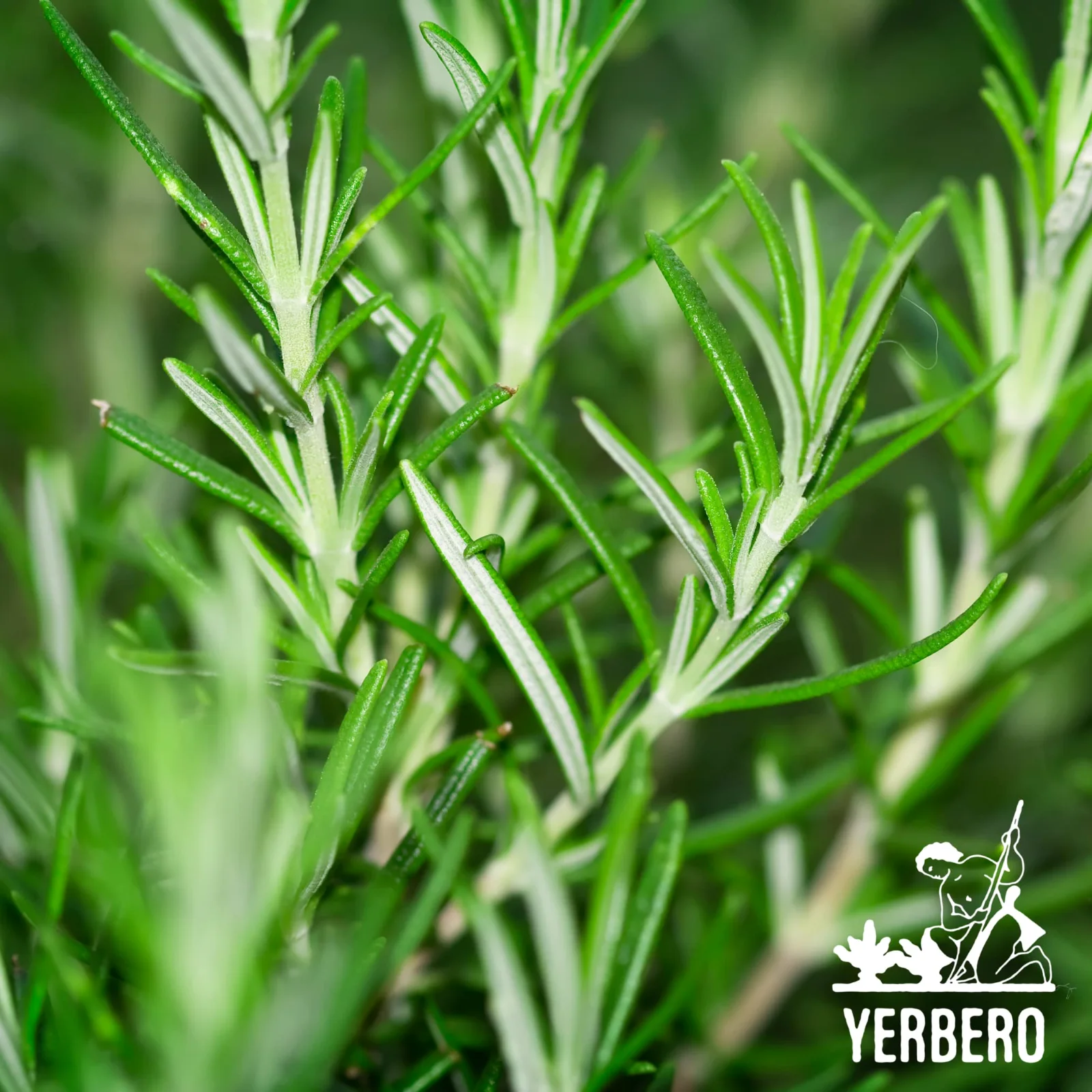 Fresh rosemary sprigs. The romero bag holds the same needles dried and simmers a tablespoon of them in a cup of water.
Anything that steeps rather than simmers reaches you through a strainer, an infuser or a teapot. Leave room for the herb to open. A cut leaf of milk thistle or a white sage leaf swells a little in hot water, and a packed strainer keeps the water from reaching the middle of the heap.
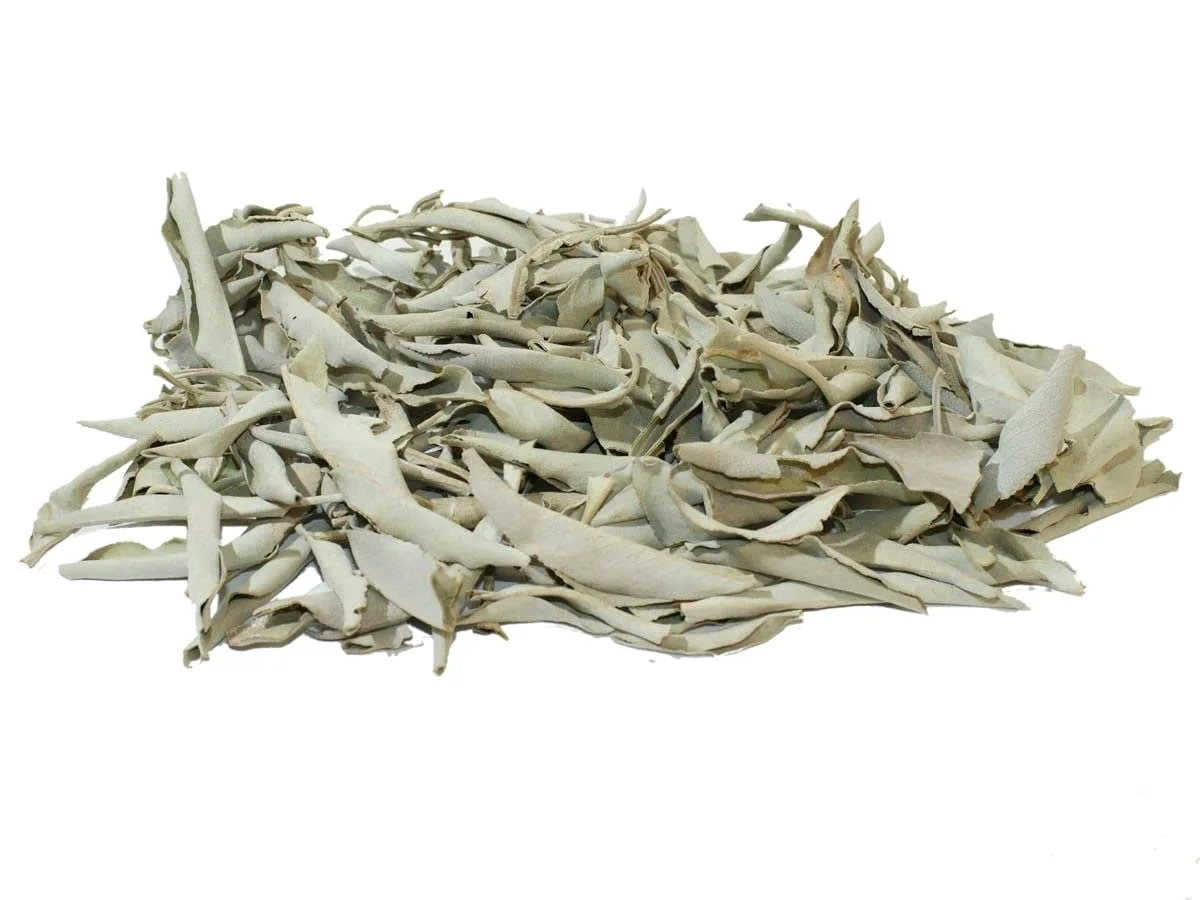 Dried white sage leaves, whole and cut. The product description asks for a tablespoon to 10 oz of boiling water.
Keeping dried herbs
Dried leaves and flowers lose their smell to air, light, heat and damp. Most of our tea bags close with a zip seal, and the seal only works if you use it. Press the air out with the flat of your hand before you close the bag, every time.
- A closed cupboard beats an open shelf. Light fades the color of dried flowers and leaves.
- Keep the bags away from the stove, the kettle and the dishwasher vent. Steam rising into an open bag turns dry leaves soft.
- Use a dry spoon. One wet spoon in a bag of ground herb leaves a lump that will not shake loose.
- Write the date you opened the bag on its front. When the leaves have lost most of their smell by the time you open the bag, expect a weaker cup and add a leaf.
- A large bag you will open daily can feed a smaller jar on the counter, so the big bag stays shut in the dark.
Boil in steel or enamel
A cocimiento can simmer for fifteen or twenty minutes and then sit in the same pot off the heat. That is a long time for any surface to touch hot water. The California Department of Public Health warns that leaded glaze on imported or handmade pottery can pass lead into food cooked or stored in it. A glazed clay olla or jarro is part of many Mexican kitchens, so this is worth a moment of your attention.
For anything you boil, use a stainless steel pot or an enameled one. Pour the finished cocimiento into glass to cool, and keep the clay jarro for the table if you love it there. The herb safety page lists that warning with its source and the others we lean on.
One more step before a new herb. The National Center for Complementary and Integrative Health at the NIH notes that herbal products may interact with medicines, may carry risks for people with some medical problems or before surgery, and that many have not been tested in pregnant women, nursing mothers or children. If any of that describes you, ask your doctor first. Each of our product pages names the source behind its cautions.
Where to start
If you are new to whole herbs, start with one of each method. Pick guava leaf or milk thistle from the leaf shelf for the short steep, and calendula from the flower shelf for a simmer. The bark and root shelf holds palo azul for watching the color come. Make each exactly as its bag prints it the first time. Change one thing on the second cup, the time or the amount, and you will learn quickly how far each plant bends.
Leaves, flowers and barks for both methods sit side by side in the YERBERO herbolario, and the A to Z herbolario lists every one by its Spanish market name with the part of the plant beside it.
This guide is general information about dried herbs and Mexican cooking, not medical advice.