Guide
Hoja de guanábana: the whole soursop leaf, bag by bag
Our guanábana comes as whole dried leaves in five bags, from a trial size to a pound of some 1,300 leaves. The 1.05 oz bag prints a simmer of four to five leaves to the cup, and Memorial Sloan Kettering publishes a short list of cautions worth reading before the first cup.
YERBERO guides · published October 21, 2026
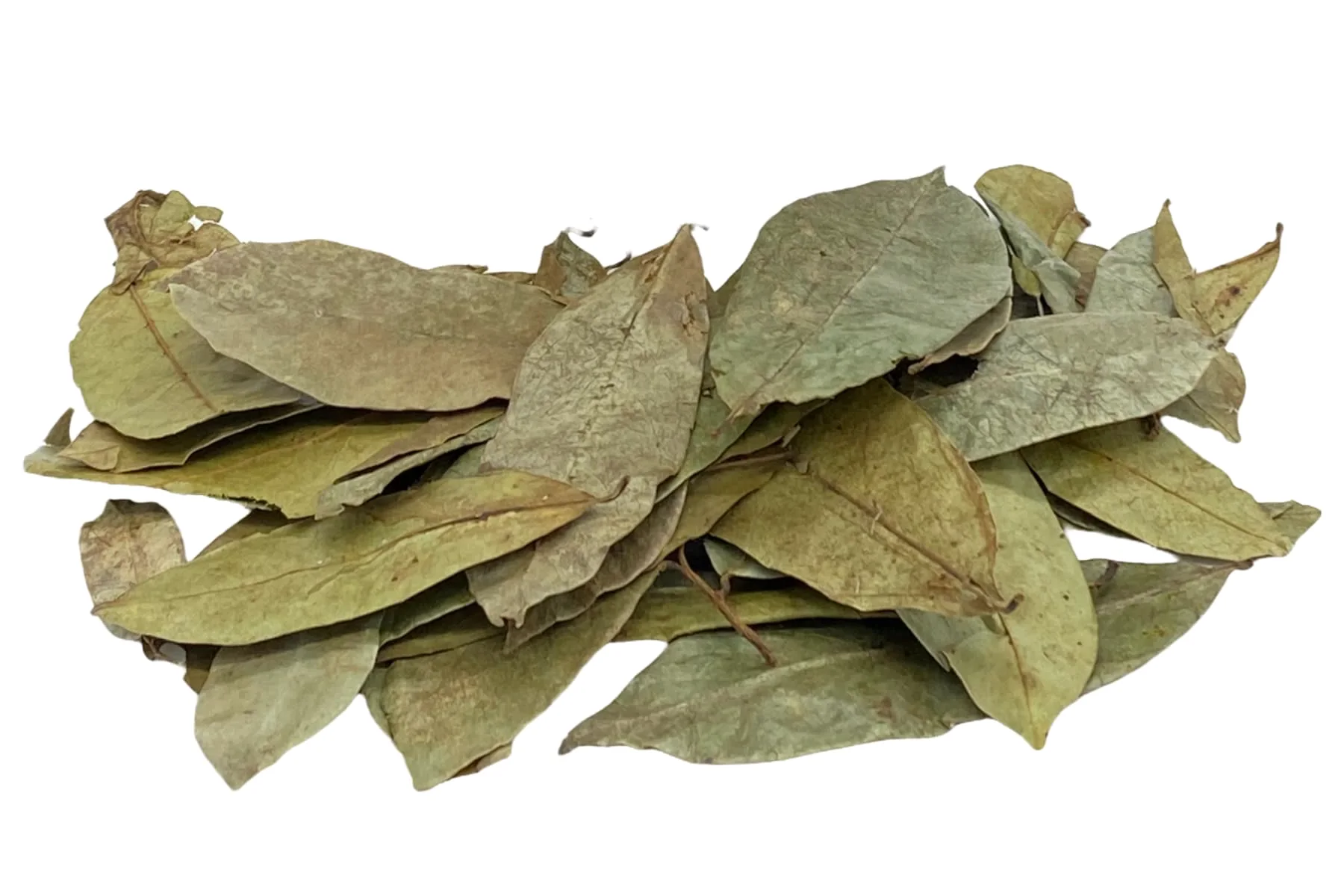
The leaf of the guanábana tree
Guanábana is the fruit of Annona muricata, the big green fruit with soft spines on its skin and white flesh inside. The leaf in our bag comes from the same tree. In the US you will see it sold as soursop leaf or graviola, and guyabano is another name on some labels. In a Mexican market it is simply hoja de guanábana.
What reaches you is the whole leaf, dried flat or gently curled, olive green and stiff. The bag holds whole leaves and nothing else, with no additives. That matters more than it sounds. You can see each leaf, count leaves into the pot and pick out a broken one, which you cannot do with a tea bag of chopped leaf.
The bag calls the leaves wildcrafted, gathered from trees growing wild, and they come from Mexico. On our site they live on the leaf shelf and under G in the herbolario, next to guayaba.
Five bags and how many leaves each holds
The smallest bag, 0.75 oz, prints a count of servings: twenty or more. Every larger bag prints a count of leaves instead, from 120 or more in the 1.05 oz bag up to 1,300 or more in the pound. Read each plus sign as a floor. The count tells you the least you will find, and leaves of different sizes share every bag.
In the table, the last column turns leaves into cups at five leaves each, the top of the four to five the 1.05 oz bag asks for. It is plain division, and it gives you a way to match a bag to your habits. Someone who drinks a cup most days needs about 250 cups a year, close to what the pound bag holds at five leaves a cup.
Hoja de guanábana by bag size, prices from our latest update
| Bag | Price | Per ounce | Printed on the bag | Cups at five leaves |
|---|
| 0.75 oz | $7.49 | $9.99 per oz | 20+ servings | |
|---|
| 1.05 oz | $8.99 | $8.56 per oz | 120+ leaves | About 24 |
|---|
| 4 oz | $10.10 | $2.53 per oz | 330+ leaves | About 66 |
|---|
| 8 oz | $18.99 | $2.37 per oz | 660+ leaves | About 132 |
|---|
| 1 lb | $29.99 | $1.87 per oz | 1,300+ leaves | About 260 |
|---|
Two things stand out in the per-ounce column. The trial bags cost far more by weight than the larger ones. If you already know you like the cup, a larger bag brings down the price of every pot you make from it. If you are trying guanábana for the first time, the small bag is the cheaper way to find out.
How the bags say to make it
Two methods are printed on our guanábana bags. The 1.05 oz bag makes the leaf a cocimiento: the leaves boil in the water, simmer a quarter of an hour or more, and then steep off the heat. The 0.75 oz and the pound bags print a short steep instead: a tablespoon in a strainer, hot water poured over it, covered three to five minutes before the strainer comes out. The longer method goes like this.
- Take four or five leaves from the bag. Rinse them under cold water if you like.
- Put them in a pot with a cup of water and bring it to a boil.
- Lower the heat and let it simmer 15 to 20 minutes.
- Turn off the heat and let the leaves steep 5 to 10 minutes more.
- Strain the tea into a cup and drink it.
The bag sets the water at a cup, so the strength of your tea comes from the leaves. Leaves in one bag differ in size: if the first cup tastes thin, use the fifth leaf next time rather than simmering longer than the bag asks.
A cup multiplies into a pot easily: five cups of water take twenty to twenty-five leaves and the same times. Strain the extra into a glass jar with a lid and keep it in the refrigerator, then drink it within a day or two. Warm a cup gently in a small pan if you prefer it hot, or pour it over ice as it is. Either way, write the day you made it on the lid so an old jar does not linger at the back of the shelf.
Large leaves fit a small pot better if you tear them in half. Use a stainless steel or enameled pot rather than glazed clay, for the reason given on the herb safety page. Strain through an ordinary kitchen sieve: whole leaves leave very little behind.
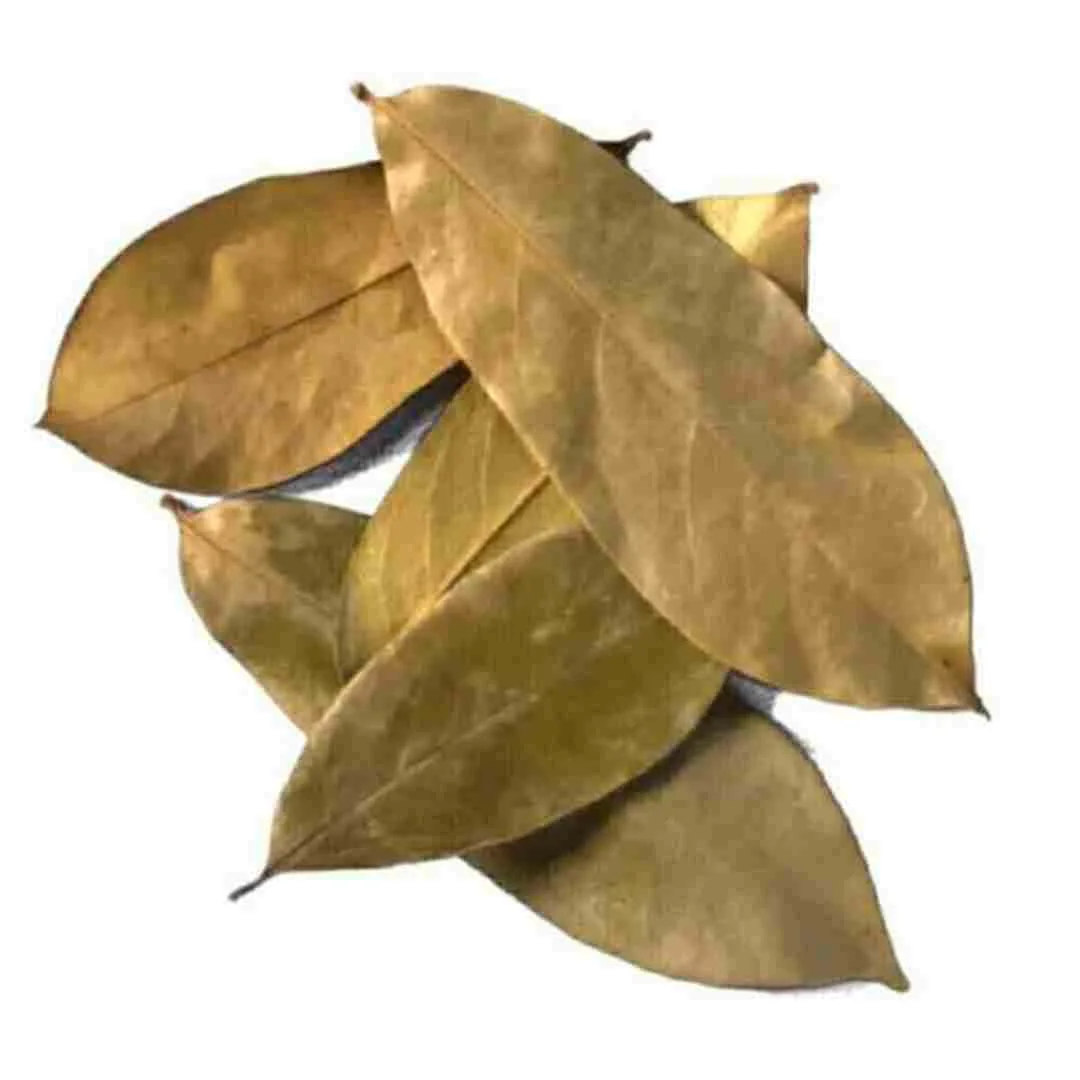 Dried guanábana leaves up close: each one counts toward the four or five the 1.05 oz bag puts in a cup.
Mango leaves, made another way
Our hoja de mango bag shows no method we can read, and its product description gives a shorter one than the soursop simmer: four clean leaves, a pot of water over high heat, off the heat once it boils, cool and strain. If you keep both bags, use a cup and a timer for the soursop and a pot for the mango.
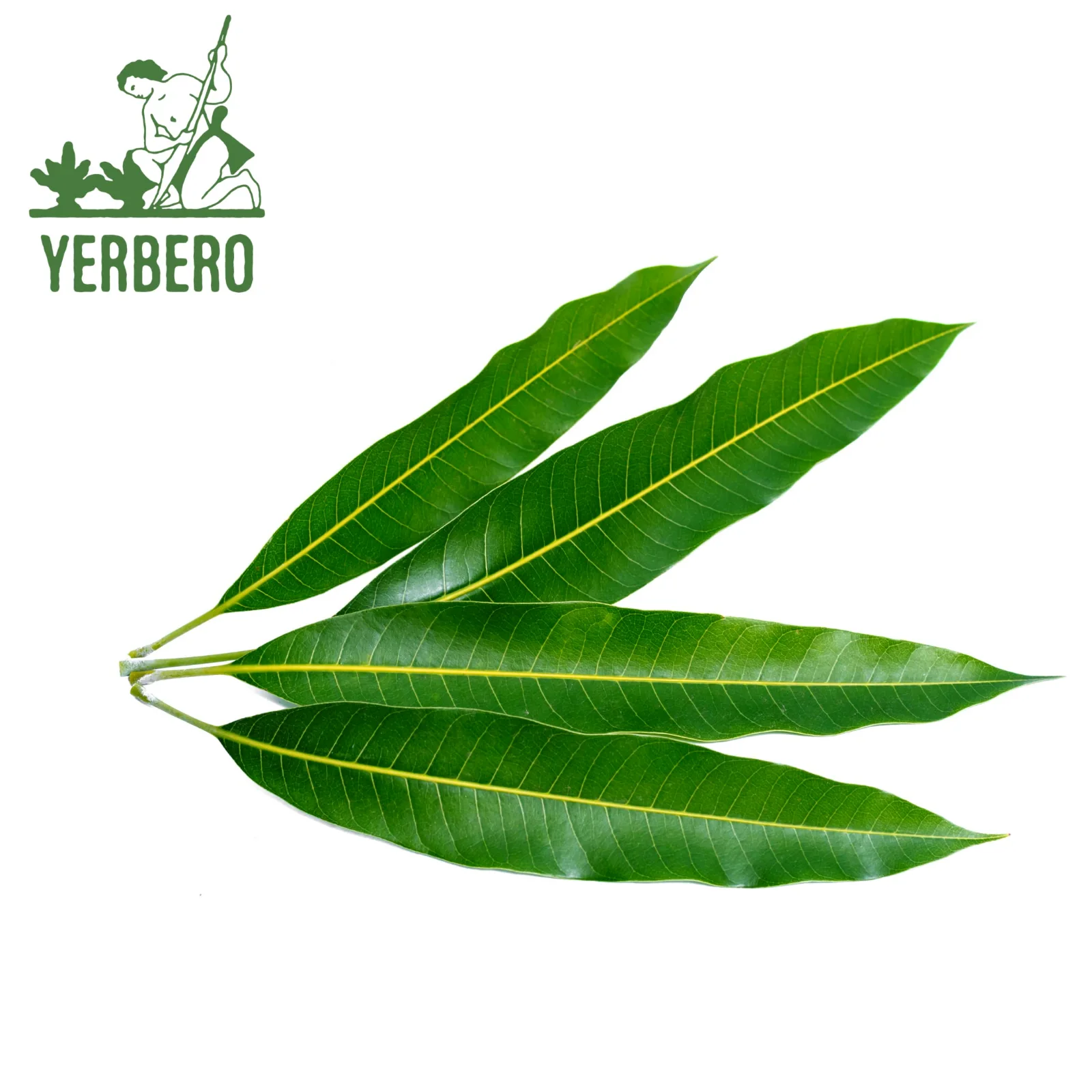 Mango leaves, long and pointed. Their product description counts four to a pot.
The two leaves look nothing alike in the hand. Mango leaves are long and narrow with a pointed tip, and guanábana leaves are shorter and oval. Both bags start at 0.75 oz and twenty servings, so a small bag of each costs little next to a single large bag of one.
What Memorial Sloan Kettering says about graviola
Much of what you read about soursop leaf online goes further than the research does. Memorial Sloan Kettering Cancer Center keeps a page on graviola in its About Herbs database, and its summary is worth knowing before your first cup.
- Memorial Sloan Kettering lists graviola as able to lower blood sugar and blood pressure. For that reason it may not be safe alongside medicines that do the same.
- It notes that graviola can affect the results of PET scans.
- It reports that laboratory and animal studies have raised concerns about toxicity to nerves.
- It states plainly that there is no proof graviola helps people with cancer.
In practice that comes down to a few plain steps. If you take medicine for blood sugar or blood pressure, talk to your doctor before you drink soursop leaf tea. If a PET scan is on your calendar, tell the doctor who ordered it that you drink it. If you or someone you love is being treated for cancer, the cancer care team should hear about any herb you take, this one included.
The National Center for Complementary and Integrative Health at the NIH adds a general caution that covers every herbal product, teas included. Herbs may interact with medicines, may carry risks for people with some medical problems or before surgery, and many have not been tested in pregnant women, nursing mothers or children. Our herb safety page links both sources in full.
Keeping a large bag
A pound of whole leaves is a big, light bag, and its label prints the short steep: a tablespoon of leaf in a strainer, covered three to five minutes under hot water. Squeeze the air out and close the zip each time. Keep the bag in a dark cupboard, away from the stove and the kettle, where steam cannot reach it. Whole leaves hold their shape well, though a few break into flakes by the time you reach the bottom of the bag.
Those flakes are what the tablespoon of the short steep measures best. Spoon them into a fine strainer, since broken leaf passes through a coarse one, pour hot water over them and cover the cup. When the leaves lose most of their smell as you open the bag, add a little more to the spoon.
Guanábana is one of the whole leaves in the YERBERO range that you measure by count rather than by the spoon, alongside mango, guayaba and avocado leaf.
This guide is general information about dried herbs and Mexican cooking, not medical advice.