Guide
Agua de jamaica from whole dried hibiscus flowers
A loose cup of dried flor de jamaica, two pots of water and some sugar give you a pitcher of deep red agua fresca. The flowers also make a hot cup in winter and a filling for tacos once the water has done its work.
YERBERO guides · published October 21, 2026
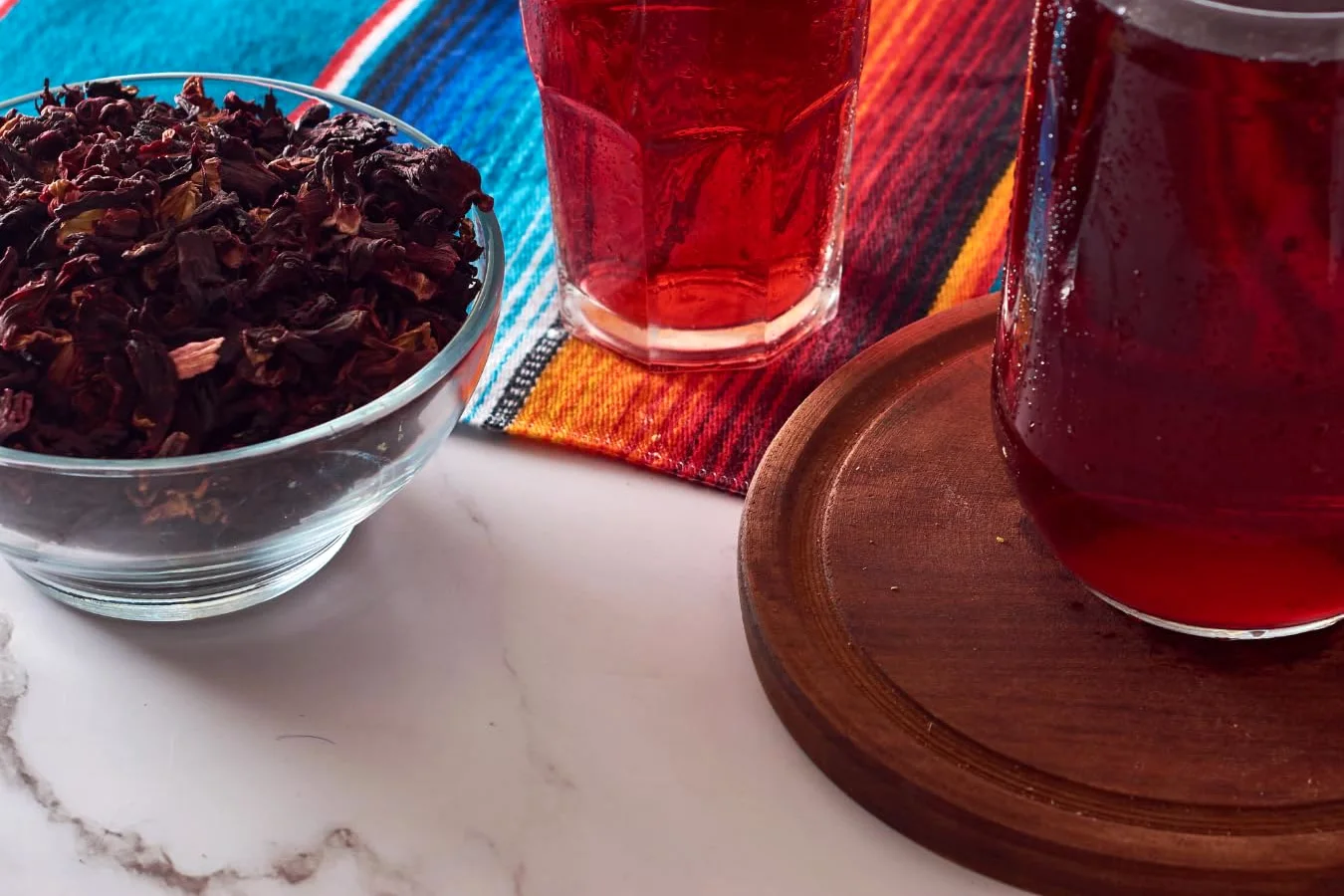
The flower in the bag
Flor de jamaica is the dried hibiscus of Hibiscus sabdariffa, also sold as roselle. Botanically the dark red part is the calyx, the cup of fleshy sepals that held the flower, but every Mexican market and every bag calls it the flower, and so do we. Steeped in water, it gives the deep red color and the tart taste of agua de jamaica, one of the aguas frescas sold from big glass jars at taquerías and markets across Mexico.
Our flor de jamaica comes from Mexico as whole dried flowers, triple washed, with nothing added. Whole flowers matter for agua fresca. They strain out in one pass through a sieve and leave no red sludge at the bottom of the pitcher, and you can reuse them in the kitchen afterwards.
The bag comes in three sizes, and it holds flowers only, with no seeds and no leaves. The 4 oz bag counts 30 servings of a tablespoon each and is enough to learn your own ratio, the 8 oz bag suits a household that makes a pitcher most weeks, and the pound is for parties, summers and anyone who also cooks with the flowers. The price per ounce falls as the bag grows.
Flor de jamaica by bag size, prices from our latest update
| Bag | Price | Per ounce |
|---|
| 4 oz | $12.99 | $3.25 per oz |
|---|
| 8 oz | $14.99 | $1.87 per oz |
|---|
| 1 lb | $19.99 | $1.25 per oz |
|---|
A common home ratio for one pitcher
Agua de jamaica has no single recipe. A ratio many home cooks use is one loose cup of dried flowers to eight cups of water in all, sweetened with half a cup to three quarters of a cup of sugar. Half the water goes in hot to pull the color from the flowers, and the other half goes in cold to stretch the concentrate into a drink. Use these amounts as a starting point and adjust them to your taste.
- Measure a loose cup of flowers. The bag says they are triple washed. Many cooks still give them a quick rinse in a sieve under cold water.
- Bring 4 cups of water to a boil in a stainless steel or enameled pot.
- Add the flowers, turn off the heat and cover the pot. Let them steep for 15 to 20 minutes, until the water is dark red and nearly opaque.
- Strain into a pitcher through a sieve. Press the flowers with the back of a spoon to get the last of the color out, then set them aside.
- Stir in the sugar while the concentrate is still warm, so it dissolves without any grit.
- Add 4 cups of cold water, stir and taste. Add more water if it is too tart, more sugar if you like it sweeter.
- Chill it in the refrigerator and serve it over ice.
Taste before you add the last of the cold water. Strength varies from bag to bag and from cup to cup, since one loose cup of whole flowers never weighs quite the same twice. If you want to plan how many pitchers a bag holds, weigh one loose cup on a kitchen scale the first time you make it. You will know the answer for every bag after that.
A big batch for a party follows the same ratio. Double everything, steep in your largest pot and give the concentrate a little longer with the lid on. Keep the cold water in a separate jug until just before guests arrive, so you can thin each pitcher as you set it out.
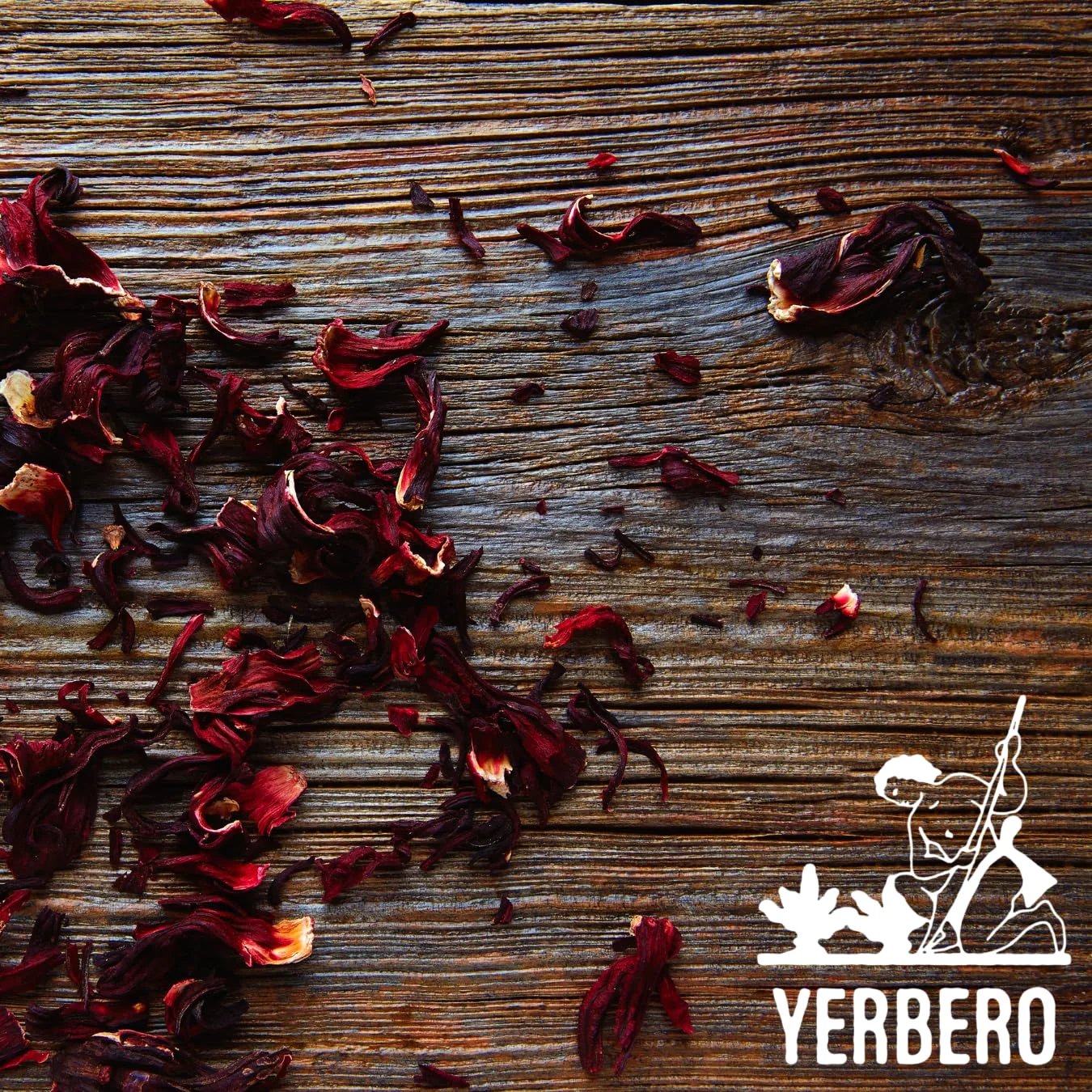 Whole dried jamaica flowers. Each dark red cup is the calyx that held the hibiscus flower.
Hot steep or cold steep
Hot water gives you a pitcher the same afternoon. Cold water takes all night, and many people prefer the result: softer, less sharp, with the same color. Both start from the same flowers and the same ratio. The difference is time.
Two ways to steep jamaica
| Method | How | Time | What you get |
|---|
| Hot steep | Flowers into water just off the boil, pot covered | 15 to 20 minutes, then chill | Deep red, tart, ready the same day |
|---|
| Cold steep | Flowers into cold water in a covered jar in the refrigerator | 8 to 12 hours, or overnight | Same color, rounder and less sharp |
|---|
For a cold steep, put the flowers in a large glass jar with all eight cups of cold water and leave it in the refrigerator overnight. Strain in the morning. Sugar dissolves slowly in cold water, so sweeten a cold steep with a simple syrup: equal parts sugar and water, warmed until clear and then cooled. Stir the syrup in a spoonful at a time and taste as you go.
Sweetening it your way
White sugar is the taquería standard, and it lets the flower taste come through clean. Piloncillo, the cone of unrefined cane sugar sold in Mexican markets, gives a darker, rounder sweetness. Grate it or melt it in the warm concentrate. Honey works too, stirred in while the concentrate is still warm.
Our jugo de maguey from Jalisco is another option. It is agave juice, sold in a natural and a roasted version as a sweetener for drinks, and it mixes into cold water more easily than granulated sugar does. Start with less than you think you need, since you can always add more and cannot take any out.
- A squeeze of lime in each glass sharpens the drink and brightens the color.
- A stick of cinnamon in the pot while the flowers steep gives the pitcher a warm edge.
- A few slices of orange, or a little orange juice in the pitcher, soften the tartness.
- Freeze some of the finished agua in an ice tray. Jamaica ice cubes keep the next glass from going pale and watery.
Keeping it in the refrigerator
Agua de jamaica keeps well in a covered glass pitcher in the refrigerator. Drink it within a few days, and stir it before you pour, because the color settles a little toward the bottom. If it starts to smell sour or look cloudy, pour it out and make a fresh batch.
The color that makes the drink so striking also stains. Wipe spills from wooden boards and counters right away, rinse cloth napkins in cold water, and use a glass or stainless steel pitcher rather than plastic, which can stay pink for good. Keep the dry flowers themselves in the closed bag, in a dark cupboard, away from steam and from the sunny windowsill.
The steeped flowers in the kitchen
Once the water has taken their color, the flowers are soft, chewy and still faintly tart. Many Mexican home cooks do not throw them away. The bag itself suggests adding the flower to dishes for a pink and purple color, and the steeped flowers are the easiest way to do that.
- Tacos de jamaica: chop the drained flowers, cook them in a pan with onion, garlic and a little oil until the edges crisp, season with salt and chile, and fill warm corn tortillas.
- Quesadillas: fold the same cooked flowers into a tortilla with melting cheese.
- Salsa: chop a spoonful into a fresh tomato salsa for color and a sour note.
Squeeze the flowers well before they go into a hot pan, or they will steam instead of crisp. Keep a sprinkle of Sal de Colima or any coarse salt nearby, since the flowers need more seasoning than you expect.
A hot cup in winter
The same flowers make a hot tea when the weather turns. A usual starting point is a tablespoon of flowers to a mug of water just off the boil, steeped five minutes and strained. Sweeten it with honey or a little piloncillo, and drop in a cinnamon stick if you like. It is the same red, the same tartness, just warm.
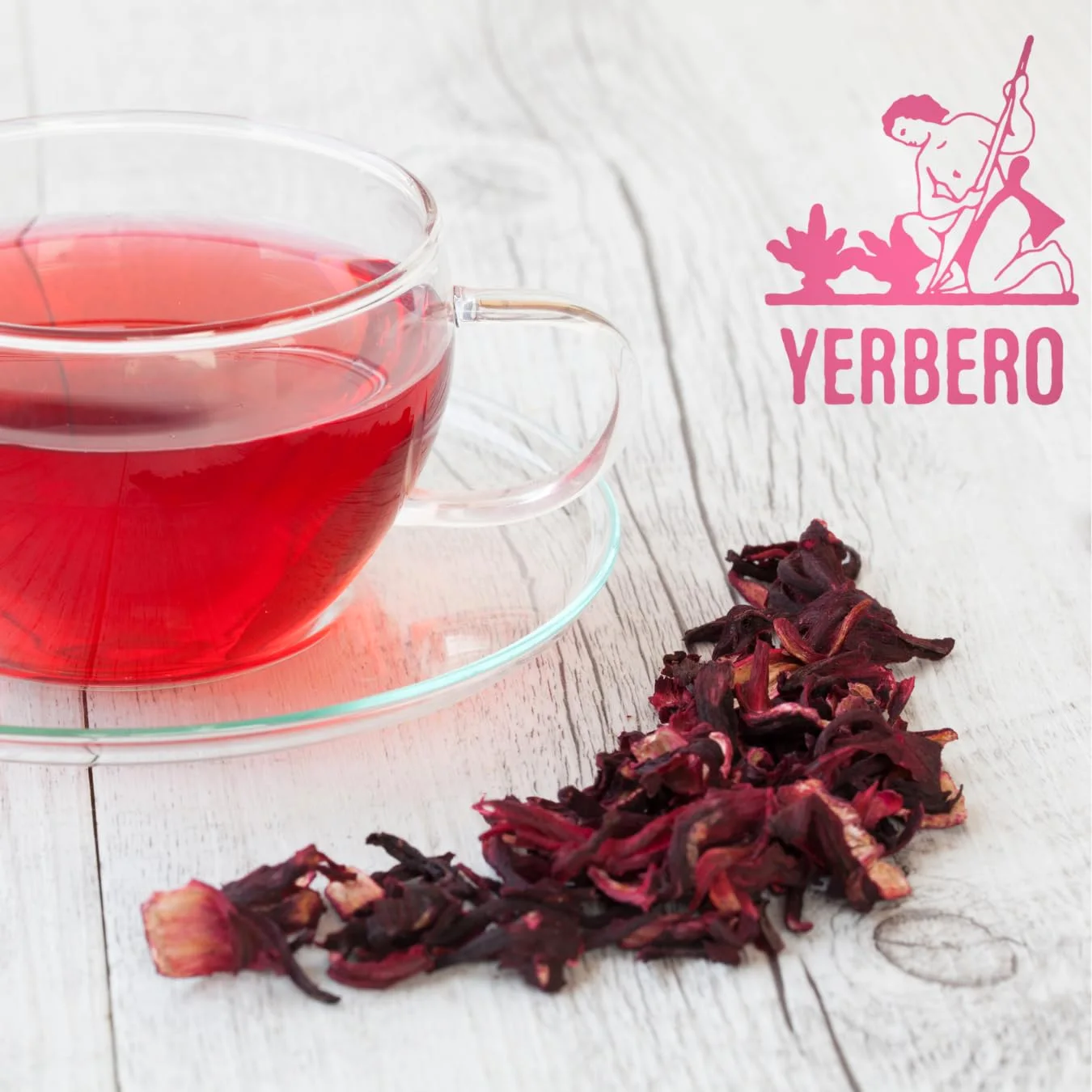 Hot jamaica tea in a glass cup, with the dried flowers beside it.
For a pot to share, multiply the tablespoon by the number of mugs and steep it covered. Jamaica pairs well with the warm spices of a Mexican winter kitchen. A strip of orange peel, a few cloves or a slice of fresh ginger in the pot all work. Find the flower, along with calendula and pasiflora, on our flower shelf.
Of the three flowers from the YERBERO herb shelf, jamaica is the one that goes from the bag to the pitcher, and every herb in our catalog has its own entry in the herbolario.